Cession and Exploitation of Mining Property
1
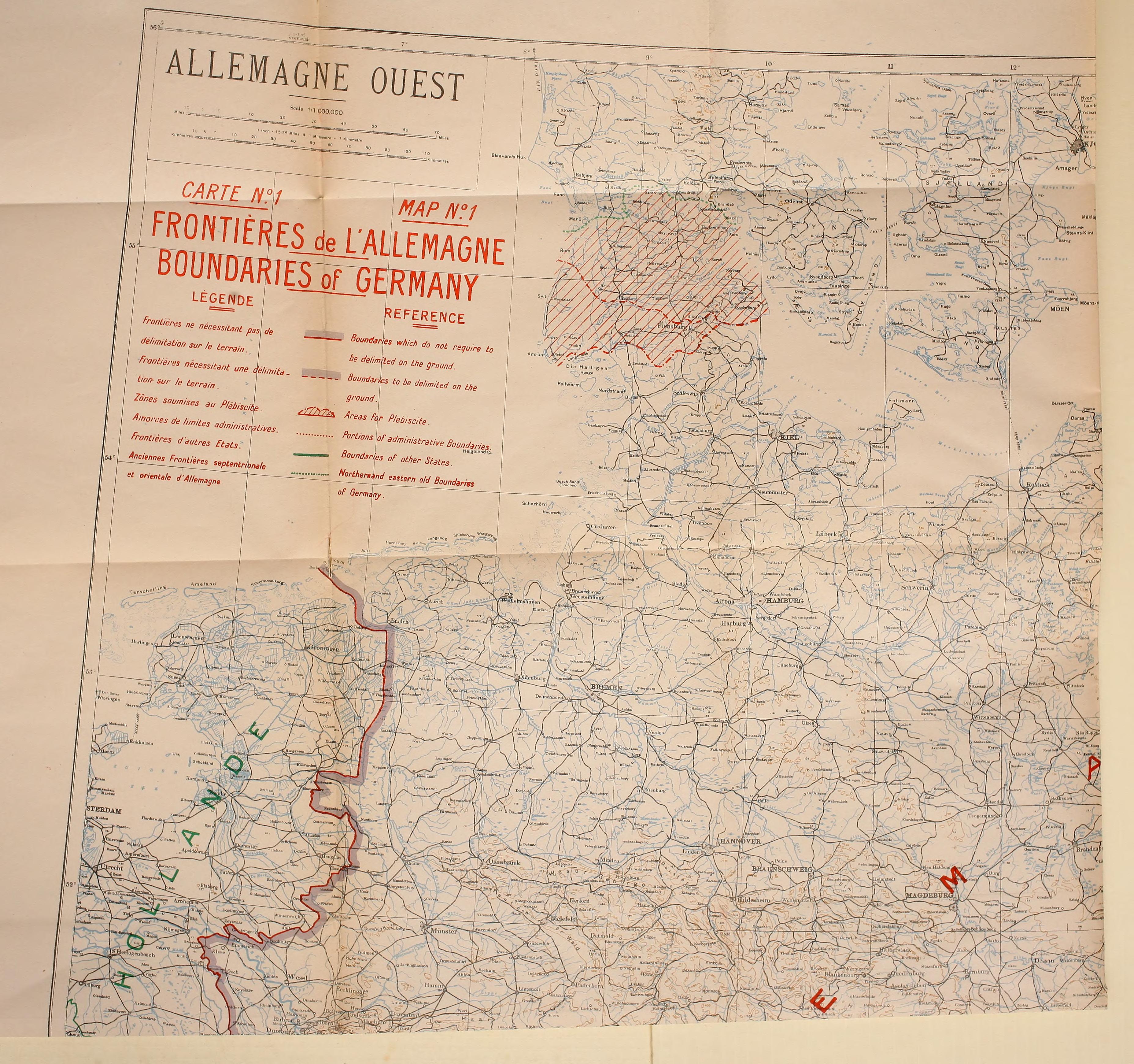
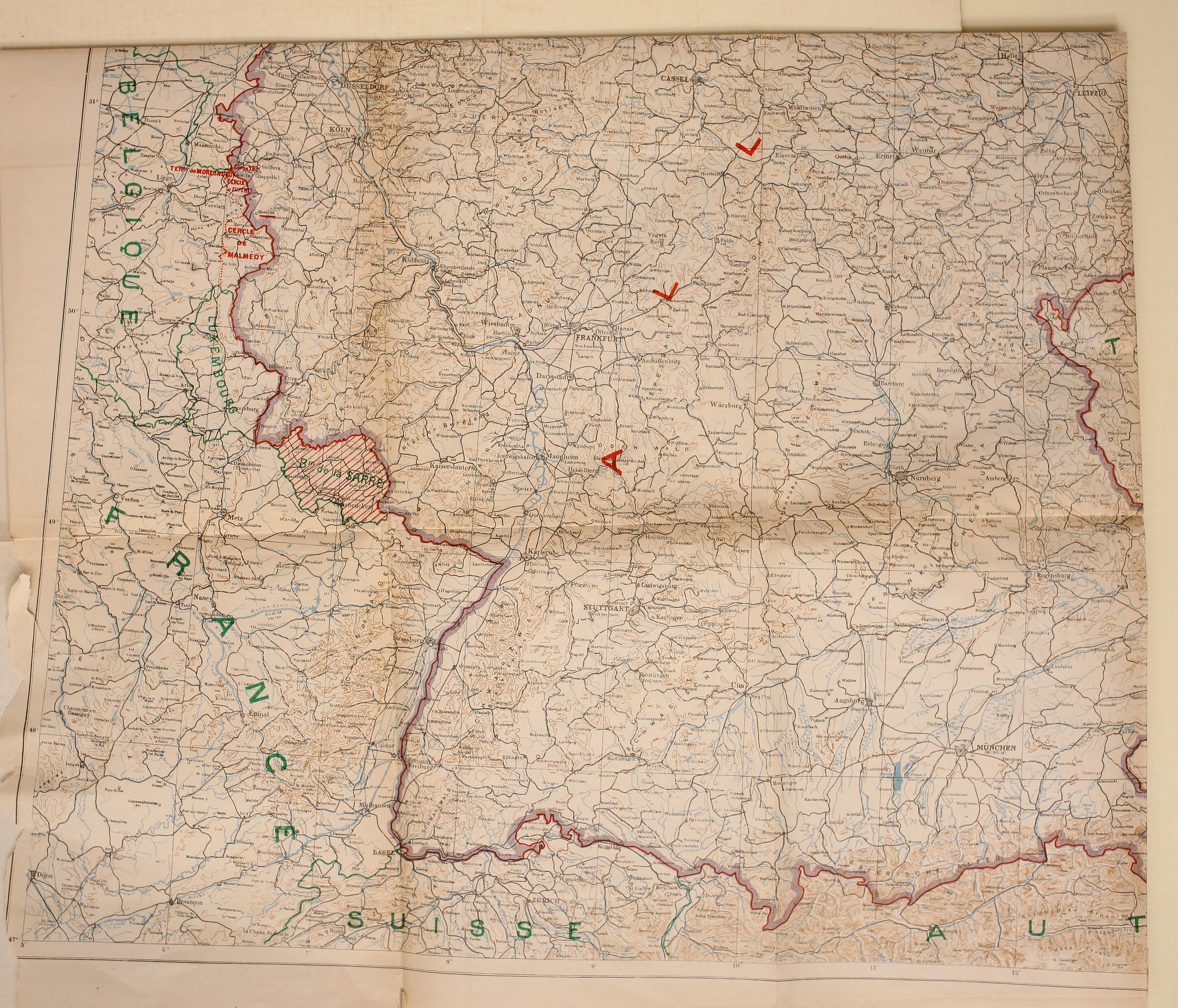
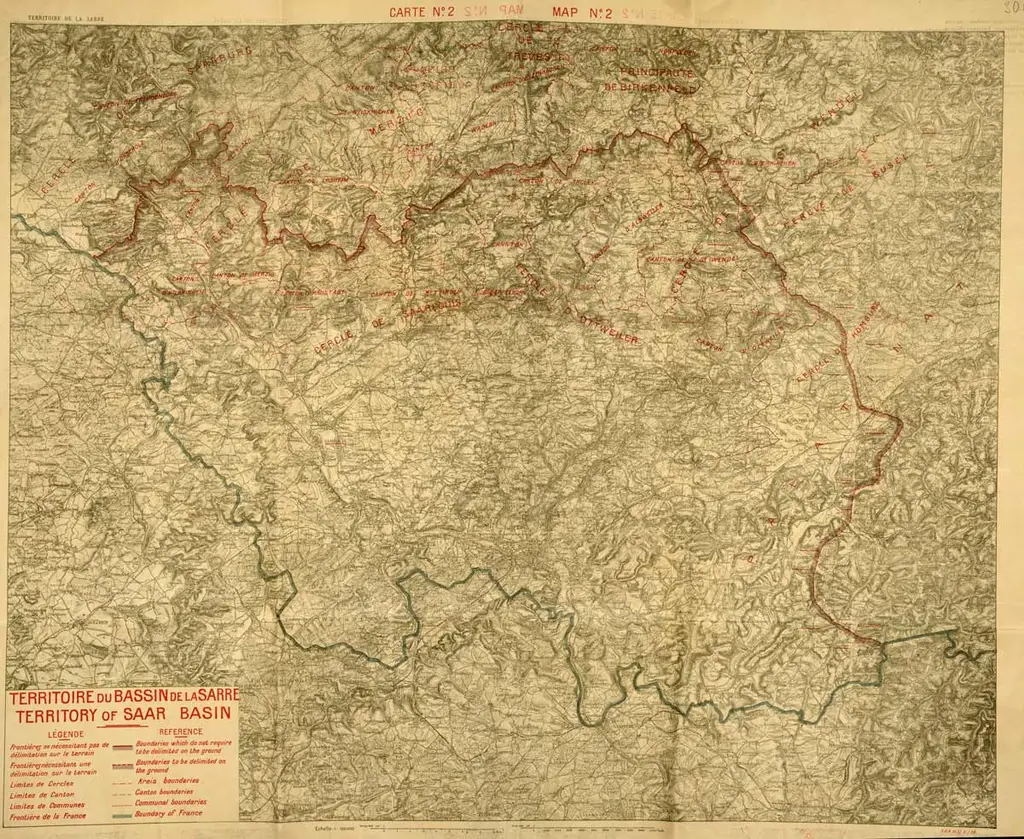
From the date of the coming into force of the present Treaty, all the deposits of coal situated within the Saar Basin as defined in Article 48 of the said Treaty, become the complete and absolute property of the French State.
The French State will have the right of working or not working the said mines, or of transferring to a third party the right of working them, without having to obtain any previous authorisation or to fulfil any formalities.
The French State may always require that the German mining laws and regulations referred to below shall be applied in order to ensure the determination of its rights.
2
The right of ownership of the French State will apply not only to the deposits which are free and for which concessions have not yet been granted, but also to the deposits for which concessions have already been granted, whoever may be the present proprietors, irrespective of whether they belong to the Prussian State, to the Bavarian State, to other States or bodies, to companies or to individuals, whether they have been worked or not, or whether a right of exploitation distinct from the right of the owners of the surface of the soil has or has not been recognized.
3
As far as concerns the mines which are being worked, the transfer of the ownership to the French State will apply to all the accessories and subsidiaries of the said mines, in particular to their plant and equipment both on and below the surface, to their extracting machinery, their plants for transforming coal into electric power, coke and by-products, their workshops, means of communication, electric lines, plant for catching and distributing water, land, buildings such as offices, managers’, employees’ and workmen’s dwellings, schools, hospitals and dispensaries, their stocks and supplies of every description, their archives and plans, and in general everything which those who own or exploit the mines possess or enjoy for the purpose of exploiting the mines and their accessories and subsidiaries.
The transfer will apply also to the debts owing for products delivered before the entry into possession by the French State, and after the signature of the present Treaty, and to deposits of money made by customers, whose rights will be guaranteed by the French State.
4
The French State will acquire the property free and clear of all debts and charges. Nevertheless, the rights acquired, or in course of being acquired, by the employees of the mines and their accessories and subsidiaries at the date of the coming into force of the present Treaty, in connection with pensions for old age or disability, will not be affected. In return, Germany must pay over to the French State a sum representing the actuarial amounts to which the said employees are entitled.
5
The value of the property thus ceded to the French State will be determined by the Reparation Commission referred to in Article 233 of Part VIII (Reparation) of the present Treaty.
This value shall be credited to Germany in part payment of the amount due for reparation.
It will be for Germany to indemnify the proprietors or parties concerned, whoever they may be.
6
No tariff shall be established on the German railways and canals which may directly or indirectly discriminate to the prejudice of the transport of the personnel or products of the mines and their accessories or subsidiaries, or of the material necessary to their exploitation. Such transport shall enjoy all the rights and privileges which any international railway conventions may guarantee to similar products of French origin.
7
The equipment and personnel necessary to ensure the despatch and transport of the products of the mines and their accessories and subsidiaries, as well as the carriage of workmen and employees, will be provided by the local railway administration of the Basin.
8
No obstacle shall be placed in the way of such improvements of railways or waterways as the French State may judge necessary to assure the despatch and the transport of the products of the mines and their accessories and subsidiaries, such as double trackage, enlargement of stations, and construction of yards and appurtenances. The distribution of expenses will, in the event of disagreement, be submitted to arbitration.
The French State may also establish any new means of communication, such as roads, electric lines and telephone connections which it may consider necessary for the exploitation of the mines.
It may exploit freely and without any restrictions the means of communication of which it may become the owner, particularly those connecting the mines and their accessories and subsidiaries with the means of communication situated in French territory.
9
The French State shall always be entitled to demand the application of the German mining laws and regulations in force on November 11, 1918, excepting provisions adopted exclusively in view of the state of war, with a view to the acquisition of such land as it may judge necessary for the exploitation of the mines and their accessories and subsidiaries.
The payment for damage caused to immovable property by the working of the said mines and their accessories and subsidiaries shall be made in accordance with the German mining laws and regulations above referred to.
10
Every person whom the French State may substitute for itself as regards the whole or part of its rights to the exploitation of the mines and their accessories and subsidiaries shall enjoy the benefit of the privileges provided in this Annex.
11
The mines and other immovable property which become the property of the French State may never be made the subject of measures of forfeiture, forced sale, expropriation or requisition, nor of any other measure affecting the right of property.
The personnel and the plant connected with the exploitation of these mines or their accessories and subsidiaries, as well as the product extracted from the mines or manufactured in their accessories and subsidiaries, may not at any time be made the subject of any measures of requisition.
12
The exploitation of the mines and their accessories and subsidiaries, which become the property of the French State, will continue, subject to the provisions of paragraph 23 below, to be subject to the régime established by the German laws and regulations in force on November 11, 1918, excepting provisions adopted exclusively in view of the state of war.
The rights of the workmen shall similarly be maintained, subject to the provisions of the said paragraph 23, as established on November 11, 1918, by the German laws and regulations above referred to.
No impediment shall be placed in the way of the introduction or employment in the mines and their accessories and subsidiaries of workmen from without the Basin.
The employees and workmen of French nationality shall have the right to belong to French labour unions.
13
The amount contributed by the mines and their accessories and subsidiaries, either to the local budget of the territory of the Saar Basin or to the communal funds, shall be fixed with due regard to the ratio of the value of the mines to the total taxable wealth of the Basin.
14
The French State shall always have the right of establishing and maintaining, as incidental to the mines, primary or technical schools for its employees and their children, and of causing instruction therein to be given in the French language, in accordance with such curriculum and by such teachers as it may select.
It shall also have the right to establish and maintain hospitals, dispensaries, workmen’s houses and gardens and other charitable and social institutions.
15
The French State shall enjoy complete liberty with respect to the distribution, despatch and sale prices of the products of the mines and their accessories and subsidiaries.
Nevertheless, whatever may be the total product of the mines, the French Government undertakes that the requirements of local consumption for industrial and domestic purposes shall always be satisfied in the proportion existing in 1913 between the amount consumed locally and the total output of the Saar Basin.